

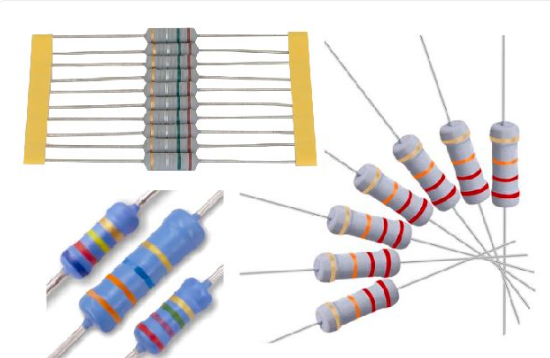
*For Wirewound Series see FKN Series
Fusible Resistors are specialized safety components that act as both a resistor and a fuse, limiting inrush current under normal operation and permanently breaking the circuit (Fusing) when overloaded, preventing fire or damage. They are widely used in power supplies, motor controllers, and consumer electronics to provide cost-effective, space-saving protection.
Key Features & Characteristics:
- Dual Functionality: They provide a specific resistance value while limiting current, then blow out like a fuse under excessive heat.
- Fail-Safe Mechanism: When overloaded, they open the circuit safely without producing flames.
- Physical Appearance: They often look like standard resistors but are typically coated with a flameproof, fire-resistant coating (often gray or white).
- Low Resistance Value: They generally have low resistance, from a few ohms to tens of ohms.
Fusible Resistor vs. Standard Fuse:
While both provide overcurrent protection, a fusible resistor serves as a dual-purpose component (limiting current and protecting) whereas a standard fuse only provides protection. Fusible resistors are designed for lower current applications (usually 100mA or less).
Common Applications:
- Power Supplies and Chargers: Used to limit inrush current and protect against output shorts.
- Consumer Electronics: TV sets, motor controllers, and household appliances.
- Automotive Electronics: Protection against abnormal voltage surges.
How to Identify:
A white band is commonly used to indicate a fusible resistor. They are usually identified by their distinctive coating and in some cases, a unique color band that sets them apart from conventional carbon or metal film resistors.